Why Most of Downtown Steamboat's Historic Buildings Aren't Actually Protected
August 20, 2026
August 20, 2026
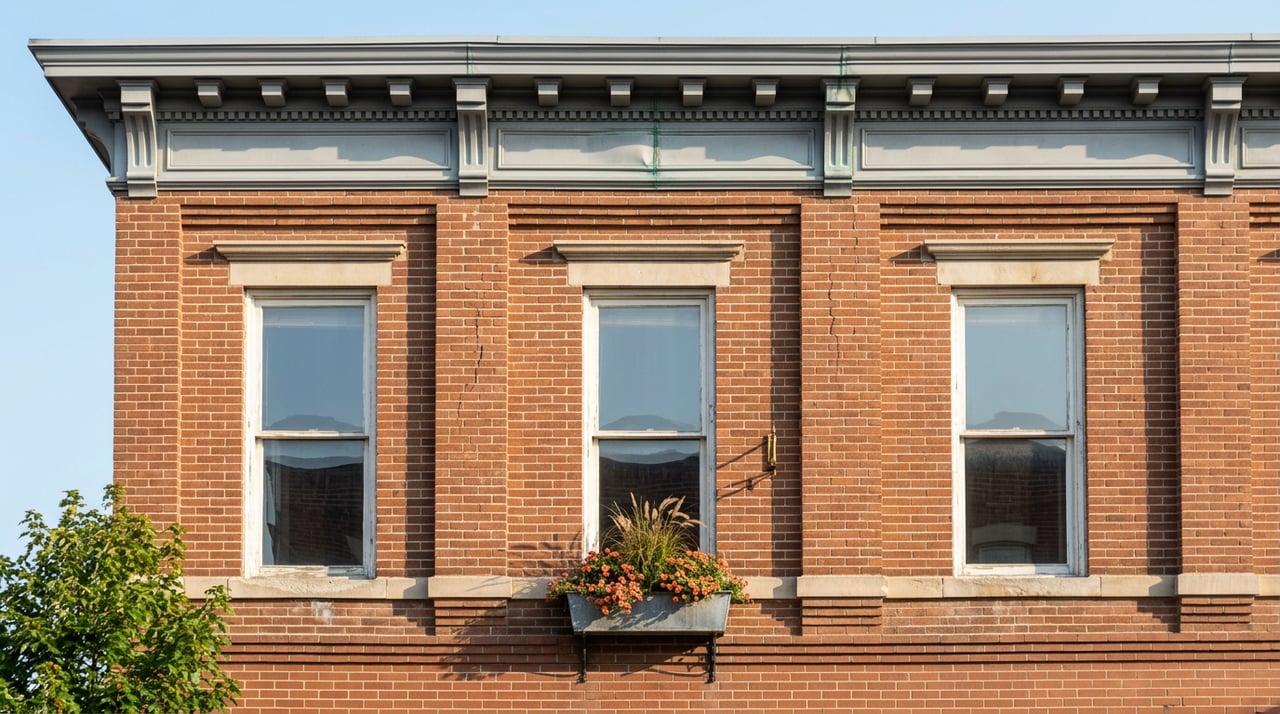
When the city added the 1908 building at 840 Lincoln Ave to the Steamboat Springs Register of Historic Places this July, Historic Preservation Planner Caitlin Berube-Smith explained what the filing actually changed. The new local listing, she said, made the Maxwell-Squire Building one of just four structures in the entire downtown district "safeguarded from demolition."
Sit with that number for a second. Not four out of four historic buildings downtown. Four, period, in a district that has stood on Lincoln Avenue for over a century.
Four out of how many? The Downtown Historic District along Lincoln Avenue holds 52 resources, 36 of them old enough and intact enough to count toward its National Register listing. Until this summer, only three had any local protection at all. If you're looking at a building anywhere in that district this year, whether you're buying it, selling it, or just trying to understand what your neighbor's teardown rumor actually means, the age of the brick tells you almost nothing about whether it can legally come down.
Steamboat Springs tracks historic buildings through three separate registers, and only one of them does anything binding.
| Register | What it actually does | What it doesn't do |
|---|---|---|
| National Register of Historic Places | Recognizes historical or architectural significance, opens the door to federal rehab incentives | Does not prevent demolition or require review of alterations |
| Colorado State Register of Historic Places | Same recognition at the state level, includes sites like Howelsen Hill and the Mesa School House | Honorary only, no restriction on demolition or major changes |
| Steamboat Springs Register of Historic Places | Requires Historic Preservation Commission review and approval before exterior alterations, protects the building from demolition tied to future development | Only applies once an owner nominates the property |
The first two are honorary. A building can be individually listed on the National Register, sit inside a National Register district, and still be legally torn down tomorrow if the owner decides to. The only register with actual teeth is the local one, established in 2009 and administered by the city's Historic Preservation Commission.
The Maxwell-Squire Building is the clearest illustration of that gap. Built in 1908 and named for James P. Maxwell, one of the city's founders, it was the largest commercial building in Steamboat Springs for more than 40 years. It's housed Lyons Corner Drug since 1909, continuing a pharmacy tradition that traces back to the old Chamberlain Gray Drug Store, and it still runs the town's oldest operating soda fountain.
Here's the part that matters for anyone evaluating property downtown: the Maxwell-Squire Building was already individually listed on the National Register of Historic Places, years before this summer. That listing never stopped anyone from demolishing it. What changed the calculus was the owner's decision this July, guided by owner's representative Erica Hewitt of Hewitt Design Studio, to nominate the building to the local register instead. That single filing is what actually took demolition off the table. Everything before it, the National Register plaque, the decades of local recognition, was symbolic.
Run the math on the district and the picture gets more specific. Fifty-two total resources, 36 of them contributing to the National Register listing, and as of this summer, four carrying the binding local designation. That leaves 48 resources along Lincoln Avenue, Oak Street, and Yampa Street that can be described accurately as "part of the historic district" while carrying zero legal protection from a future teardown.
That's not a criticism of the district or the owners inside it. Plenty of buildings stay standing because their owners want them to, not because a register requires it. But if you're comparing two "historic" properties on paper value alone, you're not actually comparing like to like unless you know which register each one sits on.
The Lorenz Building at 928 Lincoln Ave is a useful case study, because it's a live transaction rather than a hypothetical one. Built around 1899 by the J.W. Hugus Company, a mercantile and banking operation that once ran 20 locations across Wyoming and northwestern Colorado, the building has served as a Masonic Lodge, the Routt County courthouse from 1911 to 1923, a dance hall, and a Forest Service office. The Lorenz family bought it in 1958 and listed it for $2.595 million earlier this year. Today it holds 5,000 square feet across nine offices and a 600 square foot apartment overlooking Lincoln Avenue.
The public record describes the Lorenz Building as a contributing resource within the district, which is the same status Maxwell-Squire held before this July. Nothing in that description places it on the binding local register. That doesn't mean a buyer should assume the worst, or the best. It means the honest move is to ask the Historic Preservation Planner directly whether a nomination has been filed, rather than reading "historic" in a listing and assuming a protection that may not exist yet.
There's a second friction point that catches owners off guard even when they never intended to touch anything historic. Since becoming a Certified Local Government in 1999, the city has tracked any building, structure, or object 50 years or older, and any sign 25 years or older, as a potential Eligible Resource. That threshold is age based, not a fixed list, which means buildings age into review whether anyone nominates them or not. A building finished in 1976 crossed that line this year.
Crossing it triggers a mandatory review for any planning application or building permit, meaning staff has to evaluate the impact of proposed exterior changes before you can move forward. But compliance with that feedback is voluntary unless the property later goes on the local register. It's a real step in the process, not a formality, and it's easy to miss if you're planning a straightforward exterior remodel on a building you never thought of as old.
Once a property does go on the local register, exterior changes need approval from the Historic Preservation Commission, which meets the second Monday of each month at 5 p.m. in Centennial Hall. That's a real calendar constraint worth building into any renovation timeline, not an abstract governance detail.
The offset is real too. Properties designated on any of the three registers become eligible for up to a 35% Colorado state income tax credit on qualified rehabilitation expenses. For an owner planning genuine restoration work rather than a quick flip, that credit can meaningfully change the math on a project that might otherwise feel slowed down by process.
This isn't a static backdrop. Main Street Steamboat Springs was named a 2026 Great American Main Street Award semifinalist this April, one of just eight organizations recognized nationally. And this August, the city opened applications to reactivate its long-dormant Downtown Business Improvement District, the body that can fund streetscape work, parking management, and coordinated investment along Lincoln Avenue, Oak Street, and Yampa Street. Both signal that downtown's institutions are actively reworking how the historic core gets funded and stewarded, which means register status and district boundaries are more likely to shift in the next few years, not less.
If you're evaluating a downtown building built before 1976, the smart move before writing an offer, or listing one, is a direct call to the Historic Preservation Planner to confirm exactly which register applies and whether any nomination is pending. Marketing language settles nothing here. The parcel record does.
Does National Register status affect a mortgage, insurance, or the ability to sell? No. It's an honorary designation. It doesn't require public access or tours and doesn't affect the sale of the property.
If my building isn't old enough to trigger review today, is it safe long term? Not necessarily. The 50-year threshold is based on age, not a fixed list, so buildings move into eligibility every year without any change of ownership or use.
Is local designation something the city imposes, or something an owner requests? Based on how both Maxwell-Squire and other recent nominations have proceeded, it's owner-initiated. The city evaluates eligibility, but the decision to file for the binding local register rests with the property owner.
Downtown Steamboat's history is one of its real advantages, and it's also one of its more misunderstood pieces of paperwork. If you're weighing a building on Lincoln Avenue, Oak Street, or Yampa Street, whether you're the one selling a piece of that history or the one hoping to own it next, The Zopf Team can help you read the parcel record the way it actually needs to be read, before you write the offer instead of after.
Stay up to date on the latest real estate trends.






We are here to guide you through the complexities of the Steamboat Springs market with the poise and precision your investment demands.