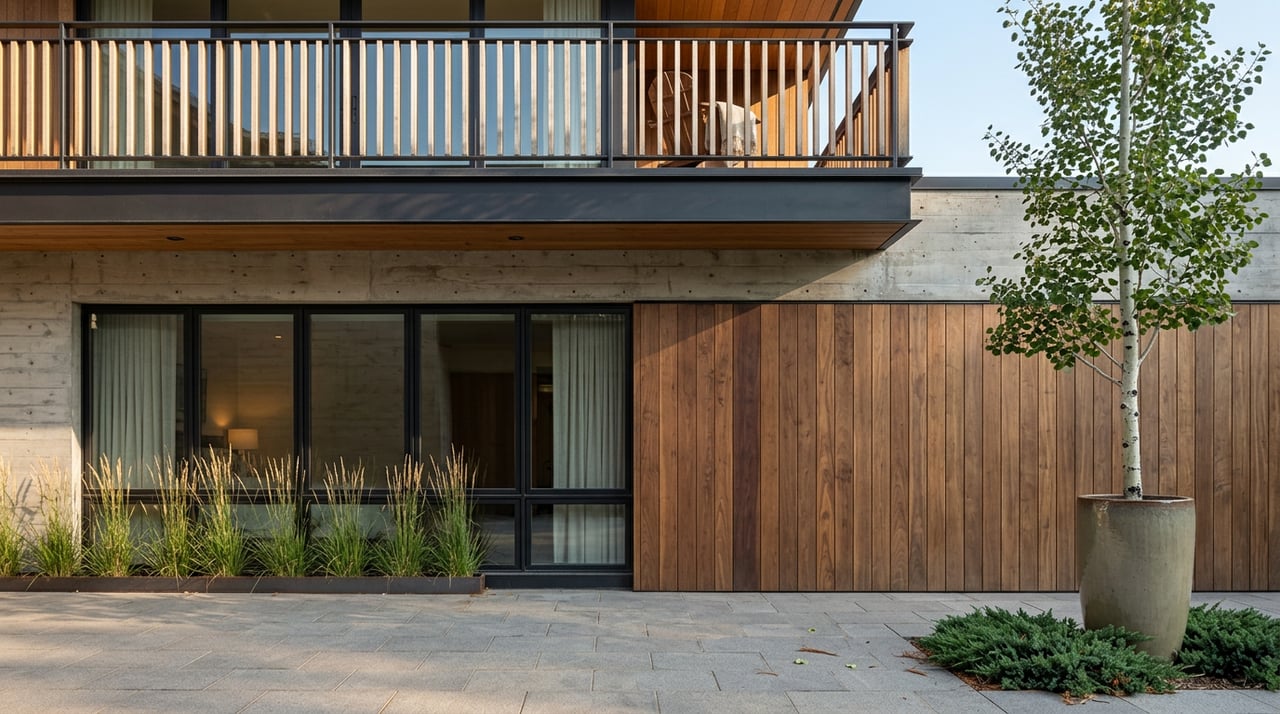
What April’s Bump Means for Steamboat Mountain Area Condo Prices
July 23, 2026
July 23, 2026
If you have been watching Mountain Area condo comps this spring, you saw the same thing every serious buyer saw: after a year of flat pricing, average dollar-per-square-foot ticked up in April 2026. The instinct is to read that as a market turning back toward sellers. The math says something narrower.
Twenty-seven of those April closings happened inside one building. Strip them out, and the resale condo market is doing the opposite of what the composite number suggests.
In spring 2026, The Amble closed 27 residences at an average of roughly $1,900 per square foot, the first new ski-mountain condominium project to close in Steamboat in sixteen years.
That single fact reshapes how a Mountain Area buyer should read every headline number for the rest of the year. Before we get to the arithmetic, though, the friction that decides whether any specific condo is worth what a comp implies deserves the first look, because it is where deals quietly fall apart.
The Mountain Area sits mostly inside the City of Steamboat Springs' Green short-term rental zone, which allows unlimited STR licenses. That designation is why base-area condos trade at premiums to otherwise similar units elsewhere in the valley. It is also where buyers make their most expensive assumption.
Two conditions have to hold for a listed unit to actually deliver the income implied by its price:
Two more mechanical details that buyers routinely miss:
None of this is theoretical. It is the reason two units listed at similar prices in the same complex can produce meaningfully different net returns, and the reason a $1,900-per-square-foot comp from a brand-new building is a poor benchmark for a 1990s resale one block away.
With that in mind, look again at April.
The Amble is a 42-residence, all-electric development by East West Partners, positioned across Mt. Werner Circle from the resort base and next to Steamboat Grand. Steamboat Ski & Resort Corporation signed a letter of intent to handle both HOA and short-term rental management, pending final HOA approval, according to the Steamboat Pilot & Today in January 2026. Twenty-seven of those units closed in the spring at roughly $1,900 per square foot, per the Pilot's June coverage of the on-mountain resale picture.
Doug Labor's June 2026 market update in Steamboat Magazine named the mechanism directly: dollar-per-square-foot values had leveled off for a year, and the April bump traced back to the first round of Amble closings pulling the citywide average up because those units are priced well above the resale field.
Two of the broader signals from the same update tell you what the rest of the market is doing without The Amble in the mix:
| Metric, Jan–Apr 2026 | This year | 8-year prior average |
|---|---|---|
| New listings | 232 | 199 |
| Absorption rate (listings sold in month of listing) | 59% | 78% |
More inventory arriving, a smaller share of it selling in the month it lists. That is not a market accelerating. That is a market where buyers have taken their time back.
Two other data points from the wider April 2026 window round out the picture. Citywide median sale price came in around $1.2 million, down about 3 percent year over year, while median days on market ran roughly 81 days versus 23 the year prior. Average dollar-per-square-foot was up meaningfully year over year in the same window, which is exactly what a mix shift toward new construction looks like: fewer, higher-priced units per closing, with each of them lingering longer before it trades.
The practical implication is that headline averages are running two markets at once and reporting a single number. A buyer reading only that number will overpay for the resale segment, which is where almost every Mountain Area transaction actually happens.
Three moves that follow from the data:
Comp against buildings, not the city. A composite $/sqft that includes The Amble, The Vantage at Village Drive, and units in resale complexes like Storm Meadows, Timber Run, or Ski Time Square is arithmetic, not information. The right comp set is other closings in the same complex over the last six to twelve months, adjusted for view, floor, and updates.
Underwrite the STR income the specific parcel and HOA actually permit. Not the zone. Not the neighborhood. The specific parcel plus the specific association's rules, with the license status confirmed and the 9% tax modeled through the entire hold.
Read days on market as leverage. Median DOM near 81 days in a segment that used to clear in three weeks is negotiating room. Sellers holding for spring numbers may be pricing to a comp set that no longer describes their buyer pool.
For context on the pipeline, the base-area redevelopment brings close to a billion dollars of new investment through projects including the Stockman Auberge Collection, Wildair, and 1700 Ski Time Square, most of it years from delivery. Every one of those closings will do the same thing to the citywide average that The Amble is doing now. Learning to read past the composite is a skill that will matter for the rest of the decade.
Does a higher citywide $/sqft mean my resale unit is worth more today? Not automatically. If the year-over-year lift is being driven by new-construction closings above $1,500 per foot, resale complexes may be flat or softer. A building-level comp set answers the question. The composite does not.
If The Amble's HOA approves Ski Corp for STR management, does that change resale values around it? It concentrates a large, professionally managed rental inventory into one building at the base. Nearby resale condos with weaker management or restrictive HOAs may see relative pressure on nightly rate and occupancy. Well-run associations in Green-zone locations should hold up.
Where does the 9% STR tax actually go? The revenue is directed primarily toward workforce and affordable housing in the Yampa Valley, including the Brown Ranch initiative championed by the Yampa Valley Housing Authority. Because the tax is tied to a broadly supported community goal, it is unlikely to be repealed, and it belongs in an underwriting model as a permanent cost.
Is now a good time to buy a Mountain Area condo? The honest answer is that it depends entirely on the building and the parcel. Inventory is higher than it has been in years, days on market are longer, and sellers of correctly identified resale units are more willing to negotiate. Buyers who can separate the new-construction signal from the resale signal have real leverage for the first time since 2020.
If you are evaluating a specific Mountain Area condominium and want the comp set, the STR zone confirmation, and the HOA rules pulled and interpreted before you write an offer, The Zopf Team is glad to do that work with you. Contact Us for a building-level read on where the numbers are, where they are going, and what a fair price looks like on the address you are considering.
Stay up to date on the latest real estate trends.
We are here to guide you through the complexities of the Steamboat Springs market with the poise and precision your investment demands.